
AI-era trust infrastructure
Proof of Reality. Even Offline.
Stagiora turns every photo into verifiable evidence — sealed at the moment of capture, protected against manipulation, and independently verifiable without cloud access.
You no longer need to trust the image. You can verify it.
The problem
Seeing is no longer believing
AI can generate or modify images so realistically that ordinary photos no longer work as strong evidence. In business this creates disputes, fraud risk, and loss of trust between partners.
Work disputes
Was the job really completed? Were the before/after photos edited later?
Insurance claims
When did the damage happen, and can anyone prove the images are untouched?
Remote decisions
Doctors, auditors, and clients need evidence they can verify — not just visually trust.
oUR SOLUTION
From sensor to proof
Photo captured on device
The image is captured directly on the device, creating the starting point for a trusted evidence chain.
Full file is hashed
A cryptographic fingerprint is created from the complete file, so any later modification becomes detectable.
Data is signed in secure hardware
The proof is signed at capture time inside secure hardware, making the origin and integrity independently verifiable.
Images are sealed into a trusted group
Related images are linked into one trusted evidence package with preserved order and structure.
Evidence can be verified anywhere
Anyone with the proof data can verify authenticity and consistency without relying on blind trust.
Proof & Verification
Check a group Fingerprint
Trusted means the system has verified that this group contains exactly these photos, in exactly this order, under this title and description.
Result states
- Trusted = the fingerprint is valid and an active matching record exists.
- Expired = the fingerprint was valid, but its validity period has ended.
- Revoked = the fingerprint was valid, but has been revoked.
- Unverified = the format is valid, but no matching record exists.
- Rejected = invalid input or verification could not be completed.
Use cases
Why people use our solution
Use cases sell the product best. These examples show how Stagiora creates trust step by step in real workflows.
Electrical work
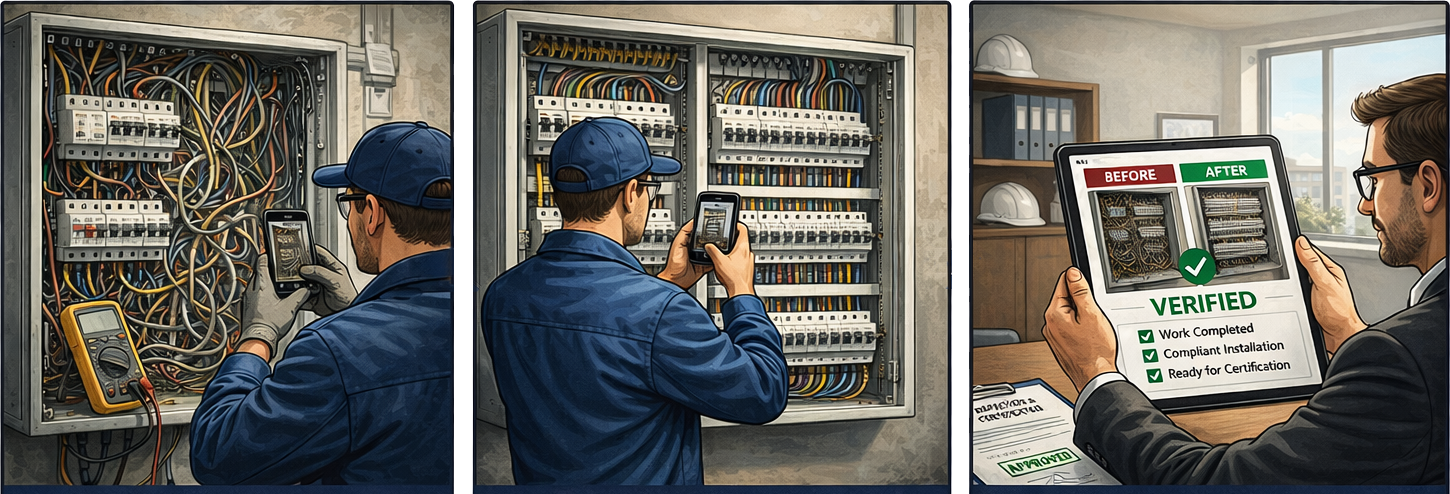
Unsafe cabinet. Corrected wiring. Certification support.
1
Before
An electrical cabinet is photographed before work begins, showing messy or non-compliant wiring.
2
After
The corrected cabinet is documented after reordering, labeling, and safety improvements.
3
Certify
The evidence package supports certification, audit trails, and accountability for the work performed.
Why it matters: Contractors and inspectors gain stronger confidence that the documentation reflects the actual completed state.
Cleaning services
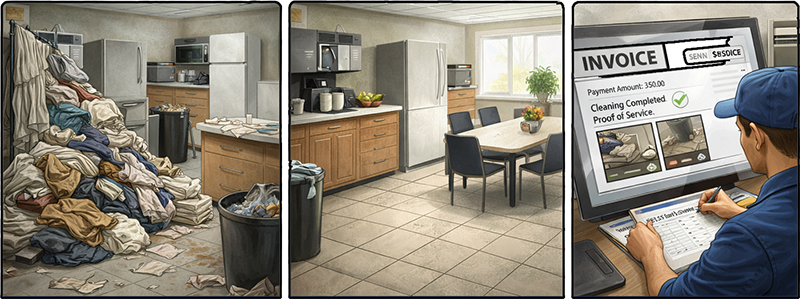
Before cleaning. After cleaning. No argument later.
1
Before
Rooms are photographed before the team starts. Condition is documented exactly as it is.
2
After
The finished result is captured immediately after cleaning, with no space for silent edits.
3
Proof
Stagiora binds the images into trusted evidence so the provider can prove what was delivered.
Why it matters: Service providers, landlords, and facility managers can resolve disputes faster with verified before/after evidence.
Logistics & insurance
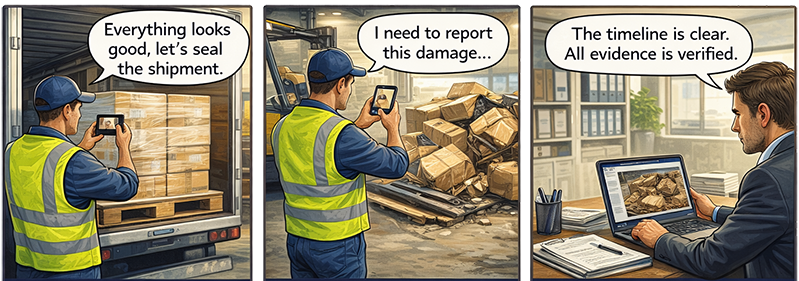
Loaded correctly. Damaged later. Timeline proven.
1
Load
Cargo is photographed at the moment it is loaded and its condition is sealed into evidence.
2
Damage
Upon arrival, damaged goods are documented in a second verified image group.
3
Claim
The trusted package is sent to the insurer with proof of authenticity and sequence.
Why it matters: Carriers, warehouses, and insurers can see exactly what changed and when it entered the documented chain.
Medical triage
Capture a skin change. Send it. Keep the trust intact.
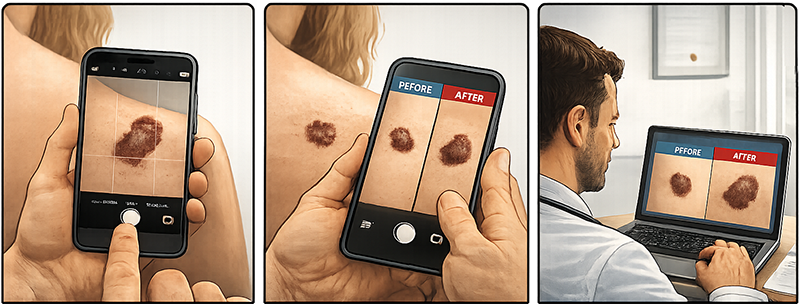
1
Capture
A birthmark or skin lesion is photographed clearly and sealed at capture time.
2
Send
The image group is shared for review without losing the evidence chain in transit.
3
Review
A doctor receives data that can be verified instead of visually guessed.
Why it matters: Remote diagnostics work better when the recipient knows the image was not modified between patient and clinician.